Showing posts with label common core. Show all posts

Sunday, October 23, 2016

Math Monday: ONE Question To Ask Your Kids When They Ask For Help

Whether your school-aged "kids" are your biological/adopted children or the students in your classroom, there's a good chance that they've asked you for help with a math problem. It's easy to give them the correct answer or help them figure out the first step, but doing so helps our kids become dependent upon us.

Every school year, I choose a new math mantra to practice with my kids. This year, I've chosen to focus on "PERSEVERANCE" for math. The new Common Core Standards have 8 mathematical practice standards that all students will master as they work through content. Here are a few that correspond to perseverance:

MP.1: Make sense of problems and persevere in solving them.
MP.3: Construct viable arguments and critique the reasoning of others.
MP.4: Model with mathematics.
MP.5: Use appropriate tools strategically.

Before students can solve a problem, they need to UNDERSTAND what that problem is asking them to do. In multi-step problems, some students read the problem once and then ask for help because they don't immediately see the arithmetic that is needed to solve the problem. Today's students are used to Googling questions, asking Siri, or texting friends if they get stuck. It's important for us to teach them HOW to work through problems that aren't easily solved. Students must be able to understand the problem, solve it, defend their steps/reasoning, and use that understanding to critique others. Students should be able to use models (tallies, pictures, diagrams, tables, etc) to help them explain their reasoning, and become more efficient when using these tools to solve problems.

With all of that being said, here are the 6 steps I am using this year to help my kids persevere through difficult math problems:

1. Have a positive attitude.
Having a positive attitude is a necessity. Many students that have not built up math stamina have a hard time entering a difficult task with a positive attitude. Help them by having them repeat positive affirmations, such as ,"I will try my best," "I can learn anything," "I'm making the decision to try," "I can do it," and "I believe in myself."

2. Read the problem, write an answer sentence, and read the problem again.
Have the student read the problem aloud. Ask them to locate the sentence that asks for an answer OR the sentence that asks a question. Using that sentence, write a sentence farm that answers the question, and use a line where the answer will go. For example, the last sentence of a word problem that asks, "How many flowers does Sophia have?" would turn into a sentence frame that says, "Sophia has __ flowers." Some students don't complete all of the steps for completing a multi-step problem, so writing this frame helps them figure out whether or not they are done solving the problem.

3. Underline/circle important information.
Help students read through the problem to look for information that helps fill in the answer frame. Students might circle numbers and key words, such as "altogether" or "how many more." Use the key words to help students figure out WHAT to do WITH the numbers. 

4. Try different strategies.
Students build mental toolboxes of strategies in school that they can use to solve problems, such as drawing a picture, using tallies, making a diagram, using manipulatives, and making tables. Encourage your kids to try different strategies if the one they're using isn't helpful.

5. Ask for help.
Some students skip step 1, complete part of step 2, and then jump straight to step 5. The BEST thing that you can do to is ask your kids the following question:

"What have you tried so far?"

It sounds simple, but it serves 3 purposes. First, it helps you see whether or not your student has worked through any strategies on their own. If they have, they should be able to tell you what they were. Make sure you praise them for any work already attempted on their own, especially for students with low math confidence. If they haven't, it will remind them that they need to go back and try some strategies on their own. Second, it helps students explain their work so far. Sometimes, explaining their work helps them redirect their own thinking. Third, it helps you understand where they got stuck. They may have copied down a problem wrong, used a strategy that isn't appropriate for the problem, or computed the wrong arithmetic.

6. Fill in your answer frame and check to see if it's reasonable.
It's so important to check answers for reasonableness. If a problem is asking for the difference between 2 numbers, the students should not end up with a number greater than the largest number in the problem.

Our kids will all be challenged with difficult problems this year, so make sure you encourage them to work through these problems. Be sure to ask them what they've already tried before offering any assistance to help them build up their math stamina.

Happy problem solving!

What is Non-Fiction Text and Why Should Your Kids Be Reading It At Home?

The Common Core state standards are attempting to correct the imbalance of fiction and non-fiction reading by emphasizing non-fiction texts in elementary school language arts instruction. Research shows that students are reading an average of 25 minutes per day at home, and of those 25 minutes, only 4 minutes are spent reading non-fiction texts (Rideout, Foehr, & Roberts, 2010).

Other studies show that children's fiction texts outsell children's non-fiction texts by 4 to 1 (millet, 2010), which suggests that children aren't reading non-fiction because those texts aren't as easily accessible as fiction texts. Prior to the Common Core state standards, roughly 10% of primary texts in classrooms were non-fiction (Duke, 2000). Common Core's push for non-fiction texts in classrooms is opening the doors to a new gateway for learning. 

With so many electronics and multimedia options, shouldn't parents just be happy that their kids are reading? Students who read more tend to learn more vocabulary, become more proficient readers, find reading more enjoyable, and thus continue to read more and become ever better readers (Stanovich, 1986), so does it really matter what they're reading? Should we be ripping Diary of a Wimpy Kid and Harry Potter out of their little hands? The answer to that is complex. Let's take a look at what non-fiction text is, what is has to offer, and how we use it.
What is non-fiction text?
Non-fiction text gives information, unlike fiction text that tells a story. There are two types of non-fiction text. One type is called literary non-fiction, which includes biographies, autobiographies, and essays. The information is intended to inform the reader, but it's told through a story-like way. The other type is called informative non-fiction, and it includes articles, interviews, how-to reading, and guides. 

Non-fiction text is structurally different from narrative text.
Non-fiction and fiction text have two completely different structures. Non-fiction text is typically organized by ideas, and each paragraph typically has its own idea. The sentences within it offer details and explanations in an organized manner that help the reader make sense of the new information. It uses headings, graphs, charts, and other text elements not often found in the narrative fiction to help guide the reader's understanding. Here's an example:
This is a paragraph that has a main idea and three details. Detail one is the first part of the main idea. For example, this example helps explain detail one. Next, detail two is the second part of the main idea. According to an expert, this statistic helps explain detail two. Finally, detail three tells even more about the main idea. The three steps for detail three are one, two, three. Details one, two, and three help further explain the main idea.
Here's color-coded  example of a paragraph organized by main idea, detail, and example/explanation/expert opinion.
If you're hosting a party and you're looking for a great dessert to offer, consider making an ice cream sundae bar. First, guests can scoop their ice cream into a bowl.  Have a variety of flavors to choose from, such as vanilla, chocolate, and strawberry. Next, they can pour a sauce over their ice cream. According to The Top Tens, caramel and hot fudge are the best-selling sauces for ice cream, so your party guests  should like them. Last, have them add toppings to their ice cream sundae. Offer crushed up candy bars, cookies, and sprinkles to delight everyone's palette. Ice cream sundaes are a great dessert to offer at parties because everyone can make their own according to their personal preferences.
The more non-fiction text that readers read, the easier it becomes to read it, understand it, and condense the information into an outline:

Ice cream sundae bar
  • ice cream: vanilla, chocolate, and strawberry
  • sauce: caramel and hot fudge 
  • toppings: crushed up candy bars, cookies, and sprinkles 
In contract, fiction text offers characters, a setting, and a plot. Somebody somewhere wants something, but they have to go through a few obstacles (and often fight against a bad guy) before they get it and the whole world can peacefully sleep at night. While fiction is great for learning how to make inferences, compare characters at the beginning and end of a story, see cause and effect relationships, etc., it neglects several comprehension skills that we all need to be fluent readers.

Non-fiction text makes up for 50% of reading instruction in grades K-5.
As students approach third grade, they are preparing for content-specific learning. Students are expected to be able to decode (accurately read aloud) words and use background knowledge to understand information (for example, a child needs to know that California is a state in the USA before they can fully understand 4th grade-Californian- and 5th grade-American- history). Starting in third grade, students begin reading to learn as they digest science and social studies texts. They learn about the world around them, how things work, and where we came from. They learn about the birth of our nation, about the relationship our country has with other countries around the world, and start to find their place in the world. Our students are now being asked to spend 50% of their classroom time reading non-fiction text, and it's important that parents are helping their children read non-fiction text at home.

Non-fiction text is the basis of future, personal-interest reading.
As we grow up, we begin asking more questions about the world around us. We read news articles, we pull up blogs about fashion trends and the housing market, we read reports about finances and sales, and we look up medical information about fevers when our babies have fevers at 2am. With so much information on the internet, it's important that we show our students and our children how to navigate that information and differentiate between impartial, factual information and slanderous, opinionated information. 

Non-fiction comprehension is assessed on the SAT and ACT tests in high school.
The ACT is broken down into five parts: English, Math, Reading, Science, and Writing. Reading is required for all five parts. Three of the four reading passages are non-fiction, many of the math problems are written as word problems, the science portion ask test-takers to read and analyze passages with charts, graphs, and tables, and the writing portion proposes a few opinions about a topic before asking the test-taker to take and present an opinion. The SAT has a different format, and it asks students to demonstrate the ability to read and critically analyze non-fiction text, but it does not include the science portion.

Non-fiction comprehension is a significant portion of learning in college and trade school education.
Two of a student's first four years of college are spent taking general education courses, many of which require large amounts of reading. The only times I remember reading fiction in college were for a medieval world history course that blended literature with history, for a series of sociology courses that looked at the way individuals interact in society, for a microbiology course (we had to read a novel about an Ebola outbreak), and for an English literature course. Other than that, all of my reading material was non-fiction text that has to be read, understood, outlined, consolidated and analyzed, and memorized.

Non-fiction comprehension is vital to career development.
When you attend professional development training for your career, there's a good chance that you're going to be reading non-fiction text. It might be a financial report, a summary of findings, a how-to manual, or a step-by-step instruction guide.

What should my kids be reading at home?
There is a PLETHORA of amazing non-fiction text that you can read with your kids that isn't stuffy or boring. Reading non-fiction at home is super fun because you can use the table of contents and index to find topics of interest and skip around in books. You can learn more about something that interests your child, you can show them more about what you do at work, you can explain how the world works, and you can give them the tools they need to be lifelong learners.

You can hop into any local or online bookstore to find great non-fiction books about ANYTHING, but some of my favorite books right now are from Usborne Books & More. They're high-quality books that are delivered to your door, and they're jam-packed with tons of information and engaging photos. 

Here's what we love from Usborne Books & More for non-fiction:

My Very First Book About (3 years+)
My Very First Our World Book
First Sticker Books (4 years+)
First Sticker Book Dinosaurs
First Sticker Book Nature
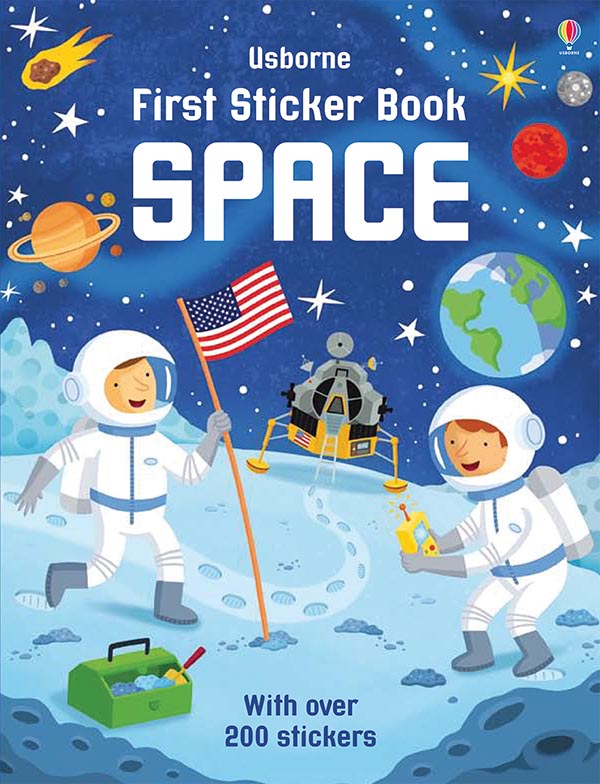
First Sticker Book Space
Look Inside (5 years+)
Look Inside An Airport
Look Inside How Computers Work
Look Inside Your Body
Lift-The-Flap Question and Answer (4 years+)
Lift-The-Flap General Knowledge
Big Books (4 years+)
Big Book of the Body
Big Book of Rockets and Spacecraft
Big Book of Big Machines
Beginning Readers (6 years+)
Firefighters
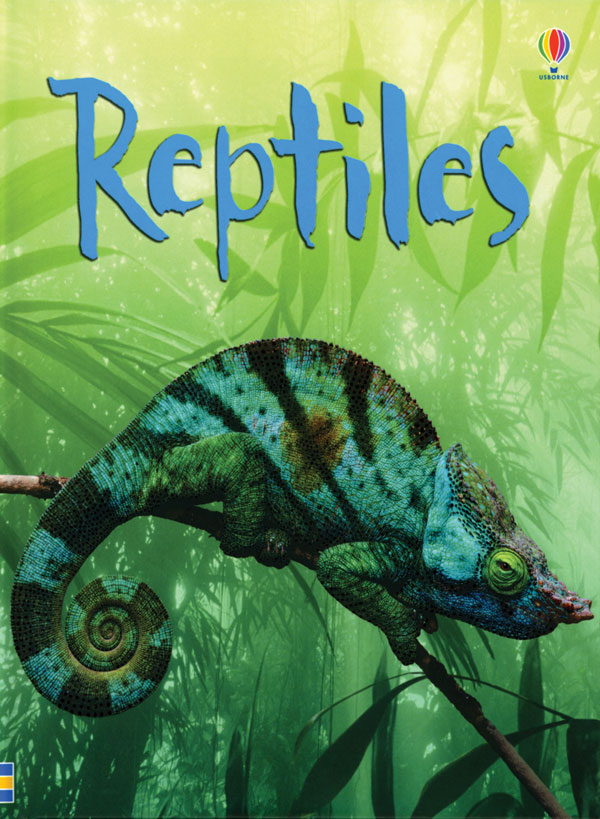
Reptiles
Castles
Discovery Adventures (8 years+)
Artificial Intelligence
Drones
Spying
History (8-11 years old)
The World Wars
Timelines of World History
Romans
Starting Point Science (6 years+): 
What Makes You Ill?
Electricity and Magnetism
See Inside (7 years+): 
See Inside Great Cities
See Inside How Things Work
See Inside Your Body
What's All About (8 years+)
What's Physics All About
Illustrated Dictionaries (12 years+)
Illustrated Dictionary of Chemistry
Illustrated Dictionary of Biology
There are several different books in each of these categories, so if these topics aren't of interest to your little readers, browse around and see what else Usborne Books & More offers. Some of these books are Accelerated Reader books, which means you can read them for classroom AR points. Some are even Internet-linked books, so you can scan the QR code on the page with your phone and it takes you to a website with a video and/or more information. How cool is that?!

Happy reading!

Friday, October 7, 2016

Kids Under Construction Presents: Usborne Books & More


Kids Under Construction is pleased to announce a fun, new line of books that will be used in the office. Usborne and Kane Miller books are exceptionally engaging and educational books that we love reading at home, and we can't wait to share these amazing stories with you!

We were first introduced to Usborne Books at an aquarium bookstore on a family trip to Las Vegas. We spent the afternoon at the dolphin encounter, and quickly found ourselves walking through the gift shop. Amongst the toys and gadgets and souvenirs, I discovered a wall of engaging books that I was eager to take home. One of the books I grabbed for the office was How to draw Fairies and Mermaids. It's full of crafts and projects to do at home, and I knew it would give me some good ideas for our mermaid camp that summer.
Buy a copy of How to draw Fairies and Mermaids HERE.
My daughter absolutely LOVES puzzles, so I wanted to take a copy of the Under the Sea Jigsaw Book home as a souvenir. It's similar to a board book, but it has a puzzle on each left page with corresponding facts about the sea animals on the right page. I love that we can play and learn at the same time. It's also great for traveling because it's a toy AND a book.
Buy a copy of Under the Sea Jigsaw Book HERE.
And because a child can NEVER have enough stickers, I also grabbed a copy of the 1001 Things to spot in the Sea Sticker Book. My daughter loves stickers almost as much as she loves puzzles, so she had lots of fun reading about sea animals, finding the hidden sea animals, and then placing stickers in the appropriate habitats.
Buy a copy of 1000 Things to spot in the Sea Sticker Book HERE.
I recently looked into purchasing some additional books for our home library, but I couldn't find any at our local bookstores. Imagine my surprise when I hopped on Instagram and discovered Homeschooling With A Happy Heart's feed FILLED with Usborne books, lesson plans, thematic units based on the books, and a link to a website to order books online. JACKPOT!

Here's some additional information about Usborne Books & More from their website:
Usborne and Kane Miller books are the most exciting, engaging, and educational books on the market today. They are high quality, innovative, lavishly-illustrated and best of all they are the books kids love to read. Choose from over 1800 bright colorful and fun titles covering a wide variety of subjects. More than 30 years ago Peter Usborne pioneered a new generation of books that prove that it is possible to create books that compete with the vast media that attracts children today. From activity books, to neat fiction series, to internet-linked science and history encyclopedias, Usborne does books better. Kane Miller has published award-winning children’s books from around the world for more than 25 years. They bring to life fantastic fiction stories for older readers and wonderful multicultural picture book stories for younger readers. All of these are stories that will make you smile, think, cry or laugh ‘til you have tears in your eyes. The combination of Usborne and Kane Miller books enables Usborne Books & More to offer you one of the most creative and original book lines in the United States.
Shop the entire Usborne Books & More collection HERE.

We hope you'll look around and find some amazing books to add to your home or classroom library. We can't wait to share more of these phenomenal books with you!

Wednesday, July 22, 2015

A Behind-the-Scenes Look At A Reading Workshop

We have been having so much fun in our Bookworms reading workshop this month! The workshop focuses on 5 areas of reading: phonemic awareness, phonics, sight words, reading fluency, and reading comprehension. Let's take a look at a few of the activities we've done.


Phonemic Awareness
Phonemic awareness is the ability to hear, identify, and manipulate individual sounds-phonemes-in spoken words. Essentially, it's being able to listen and distinguish sounds from one another. For example, the work "tick" has 3 phonemes (sounds): /t/ /i/ and /k/. The final sound, /k/, is spelled with two letters, but those letters make one sound together. Before children learn to read and spell, they must develop these listening skills. 

One of our phonemic awareness activities was identifying the place in which we hear a particular sound in a word. If I asked you to identify where you heard the /i/ sound in the word "tick", you should be able to tell me that you hear it in the middle of the word. I read off a series of words, and our students had to use cards to tell me whether they heard the sound in the beginning, middle, or end of the word. This is a really easy activity to do at home, so they got to take their cards home to practice even more.


Phonics

Phonics is a method for teaching reading and writing by developing phonemic awareness in order to teach the correspondence between those sounds and the spelling patterns that represent them. For example, the /k/ sound you hear in the word "tick" is spelled with 2 letters, c and k. The /k/ sound can also be spelled with just a /c/ or just a /k/. While phonemic awareness uses ONLY sounds, phonics uses written words. 

Many young readers look at the first letter of a word and then spit out a word that starts with that letter. Sometimes the word makes sense, and other times it doesn't. It's important to slow down and blend each sound together. We use these linking cubes to practice reading through the whole word, identifying words that rhyme, and see that the words rhyme because they end with the same sounds. They sure do love these cubes!


Sight Words

Sight words are words that young readers memorize rather than decode (sound out). Many of these do not follow the rules of phonics, and therefore cannot be sounded out correctly. Instead, we teach children a few of these words at a time. Most of these words occur in beginning text frequently, so they are worth memorizing. 

One of our favorite games involves a popcorn tub filled with popsicle sticks. Each stick has two words written on it, and students take turns pulling one stick out at a time. If the stick is green and they can read both words, they get to keep it. If they cannot read it, I help them out a bit and then it goes back in the tub. If it's red, they have to give the stick to the next student and put all of their sticks back in the tub. We play this for 5-7 every week, and they LOVE it!

Another game they like to play is called "slap". I put some sight words face up on the table. I call out a word, and the first student to find it and slap it gets to keep it. They love this one also. I'm afraid to see how excited they would get if I let them use fly swatters.


Fluency
Fluency is the ability to read a text accurately, quickly, and with expression. Fluency is what bridges word recognition and reading comprehension. In other words, it's what helps us make sense of what we are reading. If you read too slow, your brain has a hard time understanding what it's reading because it's working so hard to actually read it. Young readers tend to sound like robots when they read because they read one word, and then another word, and another word, and so on. A fluent reader is able to reads a series of words as a phrase and gain meaning from what they read. 

One of the fluency activities we did for this workshop focused on punctuation. The students read words with punctuation marks to practice taking pauses and reading with inflections. They were able to take home punctuation posters to help them practice at home. One of our young readers has improved so much now that he's paying attention to punctuation.


Reading Comprehension
Reading comprehension is the ability to read text, process it, and understand its meaning. There are many strategies that you use while reading that you probably don't even realize you use. While we read, our brains are busy making inferences, connecting ideas in the text to our own experiences, creating a series of events, and discerning between main ideas and details (just to name a few). In each session of the workshop, we focus on a different strategy. 

In the first chapter of Frog and Friends by Eve Bunting, we had to make inferences from the clues that the author wrote to figure out that "the THING" in the story was just an orange balloon. It was funny for our readers to feel like they had insider knowledge that the characters in the story didn't have. We identified where in the story we found the clues, and we talked about how using text evidence is super important. We practice each strategy with a short passage, and then we apply that strategy to our book for the week. The BEST part is that the students get to take the books home with them!


*A note on the books used in this workshop*: The I Am A Reader! series is absolutely amazing! Even Bunting, for example, is one of the authors in this series, and she's tremendously accomplished. These readers go BEYOND leveled texts. They are clever and funny, and if you have a reluctant young reader at home, I can't recommend these enough. For you educators, the back of each book features the corresponding grade level, guided reading level, RR level, ATOS reading level, Lexile measure, and word count. AMAZING! Parents, you can simply look at the grade level and get a good indication of whether or not it's an appropriate book for your reader. If they can read all but 5 of the words (or less) on the first page, take it home with you. 


The Amazing Machines series by Tony Mitton is also fantastic! The non-fiction books are fun and easy reads, and they have great information in them for curious, young minds.


Next week, we will be reading a book from the Mini Mechanics series that comes with STICKERS INSIDE! There are activity pages throughout the book, and the students use the stickers to go back and locate information. Genius, right?! I know. How come I didn't think of that?

This workshop ends next week, but we will start up a new one in September. We sure hope you'll join us! 

Thursday, May 21, 2015

Summer Reading GIVEAWAY!

Summer is right around the corner, and we know that parents are actively searching for camps and activities to help prevent the "sumer slide" from affecting a year's worth of hard work. Before we reveal the goodies in our Sumer Reading GIVEAWAY that one of our lucky Instagram and Facebook followers will receive, we'd like to talk a little bit more about the summer slide and how you can prevent it.


What is the summer slide?
The summer slide is a term used to describe the backtracking that happens when students do not read over the summer. Did you know that students can lose 2 months worth of reading performance if they don't actively engage with text over the summer? That means that your student could be 2 1/2 years behind their peers by the time they enter middle school.

Hasn't my child spent enough time reading at school?
NO! Did you know that, on average, children spend 7,800 hours at home and 900 hours at school annually? You have a lot of influence over your children's interest in reading. When students enter kindergarten, close to 100% of them are interested in reading a book outside of school. By 4th grade that drops to 54%, by 8th grade that drops to 30%, and by 12th grade it drops to 19%.  What causes that drop? Many experts believe it's caused by a drop in parents reading to and with their kids.


What's the difference between reading for 20 minutes a day and reading for 5 minutes a day?
A student that reads for 20 minutes a day reads 3,600 minutes per school year, which amounts to 1,800,000 words per year. These students tend to score in the 90th percentile on standardized tests. A student that reads for 5 minutes a day reads 900 minutes per school year, which amounts to 282,000 words per year. These students tend to score in the 50th percentile on standardized tests. Sadly, a student that reads for 1 minute a day reads 180 minutes per school year, which amounts to only 8,000 words per year. These students tend to score in the 10th percentile on standardized tests. Those little bits of minutes add up, so find a way to make it part of your routine.

How do I choose a book for my child?
There's a 5-finger rule that teachers use in the classroom. Open a book to any page and ask your child to read it aloud. For every word that they don't know, put up a finger (somewhere where they can't see it). If you put up 5 fingers for one page, the book is too difficult for your child, and they should select another book.

How can I read with my beginning reader?
Here are a list of strategies that you can use:

  • Encourage your child to use their finger to track the words they are reading.
  • Read a sentence and have your child repeat it.
  • Take turns reading sentences or pages.
  • Make predictions about the story and read to find out if you're correct.
  • Read your favorite books over and over again! Repeated reading helps build fluency and reading intonation.

What can I do to help prevent the summer slide?
There are so many things that you can do to make sure your students are engaging in text this summer. Here are a few ideas:

  • Find interactive books and games on your iPad that address reading and/or phonics.
  • Show your children all of the things that you read in your daily life. This might include recipes, directions, assembly instructions, or mail. 
  • Read to your child and let them hear the rhythm of words and exaggeration and expression in your voice!
  • Play games! Some games, such as Apples to Apples, encourage reading and are really fun to play. Slap some sight words onto Jenga blocks and read a block every time you draw one.
  • Set a good example by letting your children see YOU reading. Send a message that reading is valuable and important.
  • Visit your local library! Libraries are a great place to explore, and many local libraries, such as those here in Long Beach, offer summer reading incentives. 
  • Leave books for your child in the three best places, also knows as the three Bs: bed, bathroom, breakfast table.
What are some websites with FREE resources?
  • starfall.com
  • speakaboos.com
  • spellingcity.com
  • wegivebooks.org
  • interactives.weebly.com
What is this GIVEAWAY all about?!
Alright, let's talk about this giveaway. Having something tangible helps our tactile learners and also serves as a reminder to read. Our giveaway features the following items:

1. $10 Target gift card to be used to pick out a fun new book!

2. Retell stick: This is a stick that has one side for fiction text and one side for non-fiction text. For fiction text, students place buttons on the stick, one by one, as they tell you the characters, setting, beginning, middle, and end of the story. For non-fiction text, they place buttons on the stick as they tell you the main idea and three supporting details.


3. Reading scavenger hunt: This is a treasure map that students follow as they complete reading tasks, such as reading a book that's been made into a movie, that takes place in your favorite city, etc. How fun is that?!

4. Response sticks: These are two sets of color-coded sticks that have comprehension questions on them. The blue sticks are for non-fiction (blue = true, get it?), and include questions such as, "What was the main idea of what you read, and what were the supporting details?" The yellow sticks are for fiction, and include questions such as, "If you were interviewing the main character, what questions would you ask?" This set also includes a dice, numbered 1-6, that can be rolled to determine how many sticks your child must draw and answer that day. Throw these in a small bucket or box by their books and keep it easy!


These are items we've used in the past, and we're so excited to offer them to you in this giveaway to keep your kids reading this summer! The giveaway runs from Friday, May 22, 2015 at 8:00am PST to Saturday, May 23, 2015 at 9:00pm PST. One winner will be announced on our Instagram page within 24 hours.

To enter: 
1. Follow me on Instagram @kidsunderconstruction
2. Tag a friend on my Instagram post in the comments
3. Like our Facebook page 
4. For an extra entry, share the link to this post on your Facebook page

Good luck and happy reading!