Showing posts with label Usborne Books & More. Show all posts

Tuesday, November 29, 2016

Little Tomato Seed Co.'s First Fundraiser: Fingerprint Ornaments

The Little Tomato Seed Co. is a group of hand-picked, Long Beach students in grades 8-12 that organize and host fundraisers that benefit the Long Beach Memorial Miller Children's Hospital. We had our first fundraiser this past Saturday for Small Business Saturday. We invited families into our office to make fingerprint ornaments, and 100% of the proceeds will benefit the local children's hospital.

All of the wooden disks were cut from trees in Long Beach. The city has been trimming trees in an effort to save them, so my dad threw some in the back of his car and cut them by hand for us. This was great because they were free, it made use of a natural resource, and it showed the kids that you can repurpose "trash".


Two of the Little Tomato Seed Co.'s members weren't able to attend the event, but they still wanted to help. They were gracious enough to offer their help during their Thanksgiving break. They sanded all of the pieces, painted them, and stamped one of these onto the back of every wood disk. It's a sweet message that was perfect for the occasion and for gift-giving this holiday season. Thank you, Jiselle and Jacinda, for all of your great prep work!


These were the four samples that I made up. 


I ordered a Small Business Saturday kit from American Express and completely forgot to hand out these adorable bags designed by Rifle Paper Co.!


I had four great helpers in the office, and they jumped right in. Here's a shot of Stephanie helping us dry the paint from gloppy fingerprints. 


Here I am asking Kate what she wants written on her ornament. Ashley is hard-at-work on making her card for the patient waiting room.


You can see Mikey here helping Daphne get her fingerprints on the ornaments.


Caitie and Amanda each made 4 ornaments. The kids were busy at work on their cards. I threw some paper and pencils and crayons and glue and scissors on the table as an after-thought when I realized how long the fingerprints took to dry. I needed something for them to do, but when we were especially busy at around 10:30a, I should have pulled out the books. My helpers were really great at entertaining the kids while I frantically decorated and wrote names.


Stephanie was a great helper with the cards!


Ashlyn was busy writing the kids' names on the bags so that we knew which ornament belonged to each child. I think she's also the one that took these photos on my phone, which explains why she isn't in many of them. 


Zoya helped me get set up, and let me tell you, she sets up a mean cookie tray. She restocked it for me a few times, and she glued on the string to the back of the discs.


The look on some parents' faces when they handed me their fingerprints was priceless. It was the good-luck-making-this-cute face! I think Sterling also made 4 ornaments. This was pictured here was my favorite:


Olivia made three ornaments, and she had LOTS of fun with the paint. Her mommy, Brittney, is a crafty teacher friend of mine, so I let her decorate her own fingerprints. I wrote Olivia's name on them, and here's a proud Daddy showing off his girls' work:


And then, there's Rosie. Rosie came in during a slow time, and she had lots of fun doing her own designs. It was quiet, she got into the zone, and her ornaments are so sweet. Isn't she talented?! 


We're going to drop off the cards that the kids made to the sibling room. There's a waiting room downstairs with all kinds of fun toys for siblings to play with. We will leave these cards in there so that siblings can write notes to each other.


These four adorable children belong to Jared Wilson. Jared sat on the dot next to me for PE in middle school, and he used to drive me nuts. Ha! He's grown into the sweetest person, and I love running into him (and his family) around town. His wife brought all four of them in and they were SO well-behaved. I've also seen her with the kids at Target, and she wrangles these kids like a boss. They made family ornaments using all of their fingerprints. Isn't that so sweet? 


Zoya's family made this one. I wanted to keep it for myself.


If I'm being completely honest, I hoped that 5 people would come to our event. I only saw a few people share it on Facebook, and I thought that having 4 helpers would be too many. I brought the bags to wrap up the ornaments, and I even grabbed some tissue paper to protect them. To my surprise, we had SO many people show up that we ended up using the bags to keep track of everyone's ornaments. Again, with very little direction, my helpers just took over and helped keep everything organized and moving.

As I finished up ornaments that afternoon, it occurred to me that I may have forgotten to add beaks on the owls and antlers on the reindeer. Oops! If you took your ornament home and realized that I forgot something, PLEASE feel free to come by the office on Mondays and Wednesdays from 2:30-8:00p from now until December 21st and I'd be happy to add anything that I forgot. Shoot me an email at kristen@kidsunderconstruction.com and I'll bring my markers in with me.

Thank you all for your support! We raised a lot of money, and the Little Tomato Seed Co. and I can't wait to go shopping for our donations. 

It's not too late to contribute! Here are two ways that you can donate:

BUY BOOKS FOR YOURSELF: Visit www.kidsdigusbornebooks.com and buy some books for you home library! Orders placed by Friday, December 9th under the "Little Tomato" party will benefit the hospital. 10% of your purchase amount will be used to buy books for the hospital. For example, if you place a personal order for $100, we will buy $10 worth of books to donate to the hospital.

SEND GIFTS DIRECTLY TO THE HOSPITAL: Visit Starlight at http://hcf.starlight.org/hcf/profile/index/id/129/ to view the wish list items and send them directly to the hospital. They are in desperate need of PlayDoh and crib night lights, and there are lots of fun items to choose from. Matthew can tell you more about how to donate:


Want to find out how much money we raised in 3 hours? Follow us on Instagram at @littletomatoseedco to see the grand number. Thank you, Long Beach! We can't wait for our next Little Tomato Seed Co. fundraiser!

Sunday, October 23, 2016

What is Non-Fiction Text and Why Should Your Kids Be Reading It At Home?

The Common Core state standards are attempting to correct the imbalance of fiction and non-fiction reading by emphasizing non-fiction texts in elementary school language arts instruction. Research shows that students are reading an average of 25 minutes per day at home, and of those 25 minutes, only 4 minutes are spent reading non-fiction texts (Rideout, Foehr, & Roberts, 2010).

Other studies show that children's fiction texts outsell children's non-fiction texts by 4 to 1 (millet, 2010), which suggests that children aren't reading non-fiction because those texts aren't as easily accessible as fiction texts. Prior to the Common Core state standards, roughly 10% of primary texts in classrooms were non-fiction (Duke, 2000). Common Core's push for non-fiction texts in classrooms is opening the doors to a new gateway for learning. 

With so many electronics and multimedia options, shouldn't parents just be happy that their kids are reading? Students who read more tend to learn more vocabulary, become more proficient readers, find reading more enjoyable, and thus continue to read more and become ever better readers (Stanovich, 1986), so does it really matter what they're reading? Should we be ripping Diary of a Wimpy Kid and Harry Potter out of their little hands? The answer to that is complex. Let's take a look at what non-fiction text is, what is has to offer, and how we use it.
What is non-fiction text?
Non-fiction text gives information, unlike fiction text that tells a story. There are two types of non-fiction text. One type is called literary non-fiction, which includes biographies, autobiographies, and essays. The information is intended to inform the reader, but it's told through a story-like way. The other type is called informative non-fiction, and it includes articles, interviews, how-to reading, and guides. 

Non-fiction text is structurally different from narrative text.
Non-fiction and fiction text have two completely different structures. Non-fiction text is typically organized by ideas, and each paragraph typically has its own idea. The sentences within it offer details and explanations in an organized manner that help the reader make sense of the new information. It uses headings, graphs, charts, and other text elements not often found in the narrative fiction to help guide the reader's understanding. Here's an example:
This is a paragraph that has a main idea and three details. Detail one is the first part of the main idea. For example, this example helps explain detail one. Next, detail two is the second part of the main idea. According to an expert, this statistic helps explain detail two. Finally, detail three tells even more about the main idea. The three steps for detail three are one, two, three. Details one, two, and three help further explain the main idea.
Here's color-coded  example of a paragraph organized by main idea, detail, and example/explanation/expert opinion.
If you're hosting a party and you're looking for a great dessert to offer, consider making an ice cream sundae bar. First, guests can scoop their ice cream into a bowl.  Have a variety of flavors to choose from, such as vanilla, chocolate, and strawberry. Next, they can pour a sauce over their ice cream. According to The Top Tens, caramel and hot fudge are the best-selling sauces for ice cream, so your party guests  should like them. Last, have them add toppings to their ice cream sundae. Offer crushed up candy bars, cookies, and sprinkles to delight everyone's palette. Ice cream sundaes are a great dessert to offer at parties because everyone can make their own according to their personal preferences.
The more non-fiction text that readers read, the easier it becomes to read it, understand it, and condense the information into an outline:

Ice cream sundae bar
  • ice cream: vanilla, chocolate, and strawberry
  • sauce: caramel and hot fudge 
  • toppings: crushed up candy bars, cookies, and sprinkles 
In contract, fiction text offers characters, a setting, and a plot. Somebody somewhere wants something, but they have to go through a few obstacles (and often fight against a bad guy) before they get it and the whole world can peacefully sleep at night. While fiction is great for learning how to make inferences, compare characters at the beginning and end of a story, see cause and effect relationships, etc., it neglects several comprehension skills that we all need to be fluent readers.

Non-fiction text makes up for 50% of reading instruction in grades K-5.
As students approach third grade, they are preparing for content-specific learning. Students are expected to be able to decode (accurately read aloud) words and use background knowledge to understand information (for example, a child needs to know that California is a state in the USA before they can fully understand 4th grade-Californian- and 5th grade-American- history). Starting in third grade, students begin reading to learn as they digest science and social studies texts. They learn about the world around them, how things work, and where we came from. They learn about the birth of our nation, about the relationship our country has with other countries around the world, and start to find their place in the world. Our students are now being asked to spend 50% of their classroom time reading non-fiction text, and it's important that parents are helping their children read non-fiction text at home.

Non-fiction text is the basis of future, personal-interest reading.
As we grow up, we begin asking more questions about the world around us. We read news articles, we pull up blogs about fashion trends and the housing market, we read reports about finances and sales, and we look up medical information about fevers when our babies have fevers at 2am. With so much information on the internet, it's important that we show our students and our children how to navigate that information and differentiate between impartial, factual information and slanderous, opinionated information. 

Non-fiction comprehension is assessed on the SAT and ACT tests in high school.
The ACT is broken down into five parts: English, Math, Reading, Science, and Writing. Reading is required for all five parts. Three of the four reading passages are non-fiction, many of the math problems are written as word problems, the science portion ask test-takers to read and analyze passages with charts, graphs, and tables, and the writing portion proposes a few opinions about a topic before asking the test-taker to take and present an opinion. The SAT has a different format, and it asks students to demonstrate the ability to read and critically analyze non-fiction text, but it does not include the science portion.

Non-fiction comprehension is a significant portion of learning in college and trade school education.
Two of a student's first four years of college are spent taking general education courses, many of which require large amounts of reading. The only times I remember reading fiction in college were for a medieval world history course that blended literature with history, for a series of sociology courses that looked at the way individuals interact in society, for a microbiology course (we had to read a novel about an Ebola outbreak), and for an English literature course. Other than that, all of my reading material was non-fiction text that has to be read, understood, outlined, consolidated and analyzed, and memorized.

Non-fiction comprehension is vital to career development.
When you attend professional development training for your career, there's a good chance that you're going to be reading non-fiction text. It might be a financial report, a summary of findings, a how-to manual, or a step-by-step instruction guide.

What should my kids be reading at home?
There is a PLETHORA of amazing non-fiction text that you can read with your kids that isn't stuffy or boring. Reading non-fiction at home is super fun because you can use the table of contents and index to find topics of interest and skip around in books. You can learn more about something that interests your child, you can show them more about what you do at work, you can explain how the world works, and you can give them the tools they need to be lifelong learners.

You can hop into any local or online bookstore to find great non-fiction books about ANYTHING, but some of my favorite books right now are from Usborne Books & More. They're high-quality books that are delivered to your door, and they're jam-packed with tons of information and engaging photos. 

Here's what we love from Usborne Books & More for non-fiction:

My Very First Book About (3 years+)
My Very First Our World Book
First Sticker Books (4 years+)
First Sticker Book Dinosaurs
First Sticker Book Nature
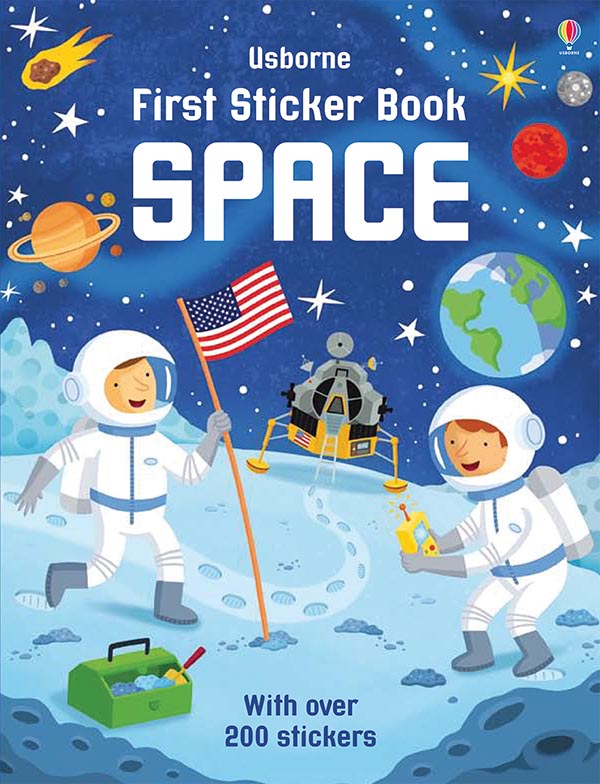
First Sticker Book Space
Look Inside (5 years+)
Look Inside An Airport
Look Inside How Computers Work
Look Inside Your Body
Lift-The-Flap Question and Answer (4 years+)
Lift-The-Flap General Knowledge
Big Books (4 years+)
Big Book of the Body
Big Book of Rockets and Spacecraft
Big Book of Big Machines
Beginning Readers (6 years+)
Firefighters
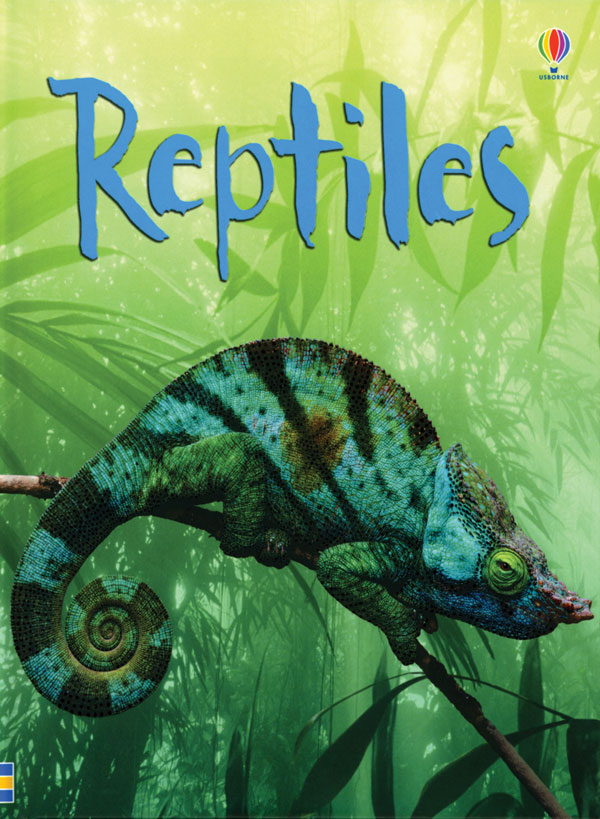
Reptiles
Castles
Discovery Adventures (8 years+)
Artificial Intelligence
Drones
Spying
History (8-11 years old)
The World Wars
Timelines of World History
Romans
Starting Point Science (6 years+): 
What Makes You Ill?
Electricity and Magnetism
See Inside (7 years+): 
See Inside Great Cities
See Inside How Things Work
See Inside Your Body
What's All About (8 years+)
What's Physics All About
Illustrated Dictionaries (12 years+)
Illustrated Dictionary of Chemistry
Illustrated Dictionary of Biology
There are several different books in each of these categories, so if these topics aren't of interest to your little readers, browse around and see what else Usborne Books & More offers. Some of these books are Accelerated Reader books, which means you can read them for classroom AR points. Some are even Internet-linked books, so you can scan the QR code on the page with your phone and it takes you to a website with a video and/or more information. How cool is that?!

Happy reading!